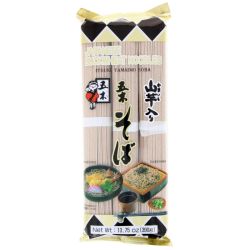
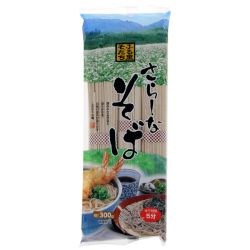
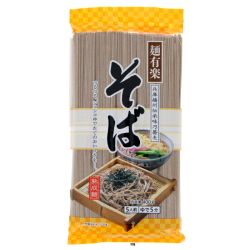
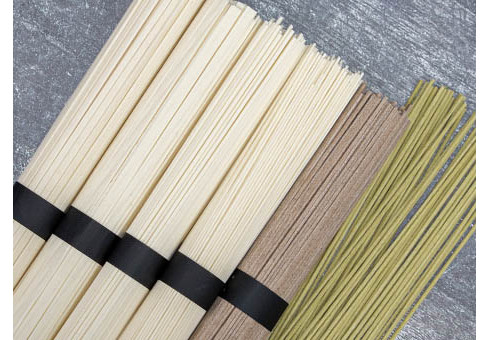
Soba are among Japan’s major traditional noodles. Finer than udon, they are distinguished by the presence of buckwheat, which gives them a grey to brown colour and a flavour that can be more or less pronounced. Chasoba are based on the same type of noodle but contain added green tea, recognisable by their green colour and subtle vegetal note.
Soba (そば) are made with buckwheat, generally combined with wheat flour to make the dough easier to work with and produce a more supple noodle. The proportion of buckwheat varies considerably: the higher it is, the more pronounced the flavour and the more delicate the texture.
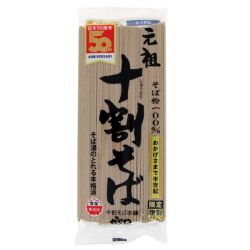
Jûwari soba (十割そば), made from 100% buckwheat, have a particularly distinctive flavour and require careful cooking. However, they should only be considered gluten-free when this is clearly stated for the specific product.
Darker and more rustic, inaka soba (田舎そば) also have a pronounced buckwheat flavour. The word inaka means “countryside”. Some recipes also use yam to provide binding and create a different texture.
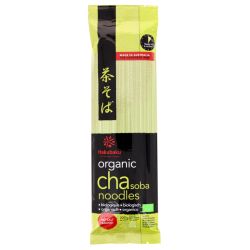
Chasoba (茶そば), or green tea noodles, contain powdered green tea. Their composition may still be mainly wheat-based, and their buckwheat content varies between recipes. The percentage indicated therefore helps you choose between a very mild noodle and a soba with a stronger character.
Soba and chasoba therefore form a very different family from udon and kishimen.
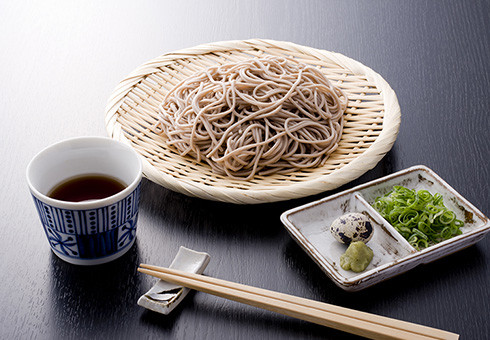
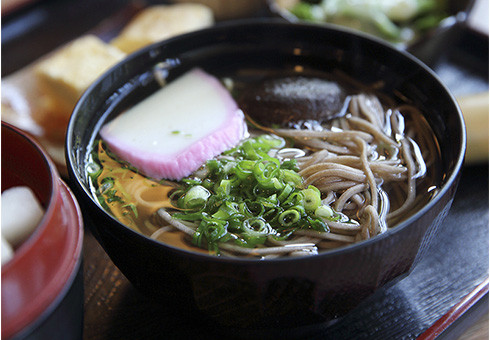
Soba can be served hot in a broth made with dashi and soy sauce, accompanied by spring onion, tempura, fried tofu, nori or grated daikon. When served cold, they become zaru soba (ざるそば): after cooking, the noodles are rinsed thoroughly under cold water to remove excess starch, firm up their texture and stop the cooking process, then dipped bite by bite into a tsuyu sauce.
Chasoba are particularly well suited to this cold presentation, which highlights their colour and green tea note. For a hot dish, it is also preferable to rinse them before briefly reheating them in the broth just before serving.
Finer and milder, somen and hiyamugi provide another option, particularly for summer meals.