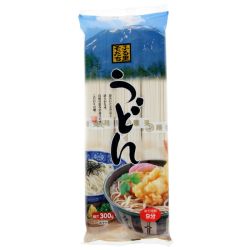
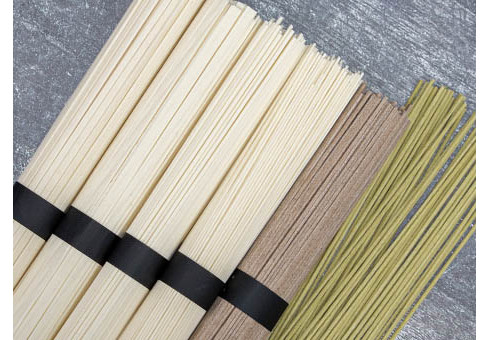
Thick, supple and pleasantly chewy, udon and kishimen occupy a distinctive place among Japanese noodles. Their flavour remains subtle: the main differences lie in their shape, texture and how they hold broth or sauce.
Udon (うどん) are traditionally made with soft wheat flour, water and salt. They are generally thick, white and more tender than ramen noodles. Their firmness varies according to the production method and regional traditions: Sanuki udon are particularly known for their pronounced chewiness, while other styles favour a softer texture.
Some of the products available here also come from Gunma, a Japanese region with its own tradition of wheat noodles.
Kishimen (きしめん) belong to the same family, but their dough is cut into wide, flat and relatively thin strips. This shape gives them a smoother mouthfeel and a large surface that holds broth particularly well. Kishimen are especially associated with Aichi Prefecture and the cuisine of Nagoya, although they are also produced in other regions.
Udon are very often served in a hot broth made with dashi and soy sauce. They may be accompanied by spring onion, tempura, fried aburaage tofu, egg or vegetables. Curry udon combines these thick noodles with a Japanese curry soup, while yaki udon is stir-fried with sauce, vegetables and, if desired, meat or seafood.
When served cold, udon are drained and rinsed to stop the cooking process and firm up their texture. They are then enjoyed with tsuyu, served separately or poured directly over the dish.
Kishimen are prepared in a similar way, either hot in broth or cold with a sauce. Their flat shape allows them to absorb the seasoning particularly well. Dried noodles should be watched carefully during cooking and then rinsed thoroughly to remove the starch from their surface.
For a finer texture and a more pronounced buckwheat flavour, soba and chasoba form another family. Much thinner, somen and hiyamugi cook quickly and are particularly well suited to cold dishes.