Filter By

Availability

Availability

Special

Special

Ramune

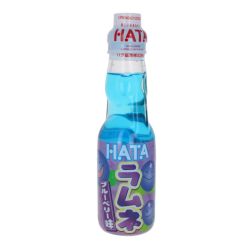
Japanese ramune (ラムネ, pronounced “rah-moo-neh”) is a sparkling lemonade immediately recognisable by its narrow-necked bottle and the glass marble used as its stopper.

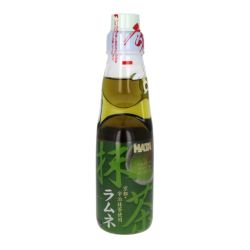
Closely associated with summer festivals and matsuri, it is best served well chilled. The classic flavour is mild and citrusy, with a taste reminiscent of candyfloss. Many flavours are now available, including melon, yuzu, strawberry, lychee, watermelon, orange and ume plum.

The name “ramune” comes from the Japanese pronunciation of the English word “lemonade”.

A first carbonated drink of this type is said to have been introduced to Japan in 1853, when Commodore Perry’s American fleet arrived. In 1865, Fujise Hanbei began producing it in Nagasaki and marketed it under the name レモン水 (remon-sui), literally “lemon water”. This name did not catch on, while the English word “lemonade”, gradually adapted to Japanese pronunciation, became “ramune”.

Japanese adapts foreign words to its own syllabic system: the English “l” is rendered by a very light Japanese “r”, somewhere between the English “r” and “l” sounds, and each vowel is pronounced separately.

The drink gradually became part of everyday life and eventually one of the symbols of the Japanese summer. Ramune Day is celebrated in Japan on 4 May, commemorating an application for production authorisation submitted in Tokyo in 1872.

The marble was not added to make life more difficult for thirsty people: it is the bottle’s actual stopper.

Invented in England by Hiram Codd during the 19th century, the system uses the pressure of the carbon dioxide to push the marble against a seal inside the neck. The bottle therefore remains tightly closed without a crown cap or cork.

When the bottle is opened, the marble falls into the narrow section of the neck, where two small indentations hold it in place while you drink.

In the Japanese drinks industry, it is known as a ramune-dama (ラムネ玉), or “ramune marble”.

Another interesting point is that the traditional distinction between ramune and cider in Japan mainly depends on the container. Lemonade sealed with a marble is ramune. When it has a crown cap or screw top, it belongs instead to the family of Japanese sodas and cider.

Begin by chilling the bottle thoroughly and, ABOVE ALL, avoid shaking it. Remove the outer wrapper from the cap, then detach the small piece used to push down the marble. Stand the ramune upright on a stable surface, place the opener over the neck and press down firmly with the palm of your hand.

Once the marble drops, keep pressing for a few seconds while the foam settles. Releasing it immediately is the best way to serve the ramune to the table rather than to your guests.

To prevent the marble from blocking the opening while you drink, tilt the bottle gently so that it rests inside the indentations in the neck. Metal containers and some modern bottles may naturally use a different opening system.

For a simpler drink without this little ceremony, Japanese bottled and canned teas offer a very different view of everyday drinks in Japan.

Active filters