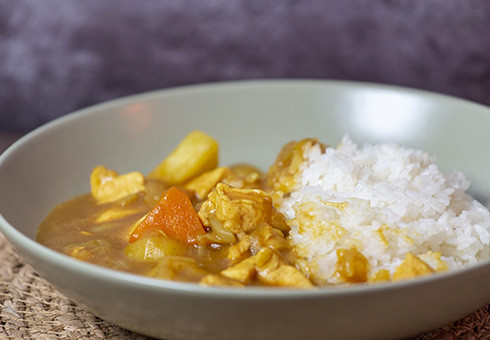
Japanese curry is a simple dish served with rice, vegetables and the toppings of your choice. Find out about the different ways to prepare it, from curry roux blocks to ready-prepared curry.
Japanese curry, or karē raisu (カレーライス), is one of Japan’s most popular dishes, enjoyed both at home and in restaurants. Introduced in the late 19th century under British influence, it was adapted to Japanese tastes to become a mild, smooth dish. Unlike Thai or Indian curries, which tend to be spicier, Japanese curry is known for its thick texture and slightly sweet flavour. It is based on a roux, or rū (ルウ), a mixture of flour, butter and spices that gives it its characteristic velvety consistency.
It is most often prepared with onions, carrots and potatoes, followed by chicken, pork or beef according to preference.
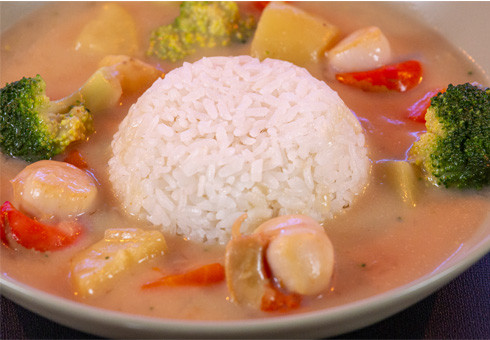
Served with Japanese rice, it makes a complete meal that is easy to adapt. Mild, medium, hot and extra-hot options allow everyone to choose the level of heat that suits them.
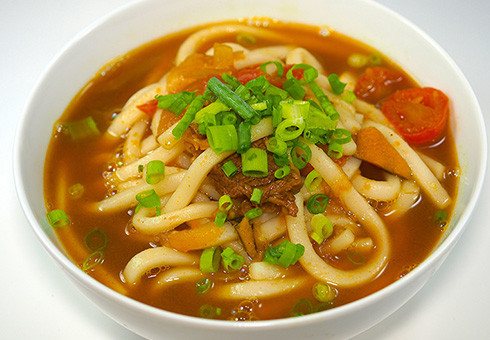
Traditionally served with Japanese short-grain rice, curry is also prepared as curry udon (カレーうどん), with thick noodles in a curry sauce, or curry pan (カレーパン), a fried bun filled with curry. In Japan, every family has its own curry recipe, often made with vegetables such as carrots, potatoes or onions, and beef, pork or chicken. Some even add a personal touch with pieces of banana, honey or coconut to make the sauce milder.
Among the many curries available, S&B and its famous Golden Curry range are particularly well known. However, there are many other types of Japanese curry, made with different ingredients and usually available in several levels of heat: mild, medium or hot... and sometimes even hotter!
They are easy to prepare: simply stir the curry roux blocks into a pot of simmered vegetables and meat to create a rich, glossy and aromatic sauce.
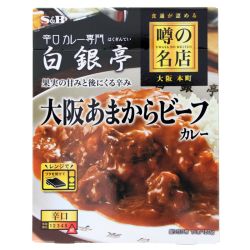
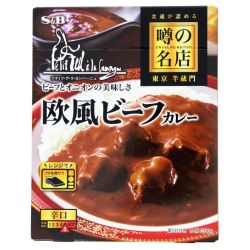
Ready-prepared curries are also available: simply pour the curry over the rice and reheat the dish.