Japanese rice flour does not refer to a single product. The result depends first on the rice used, then on how it is prepared and how finely it is milled. Some flours produce a firm dough that is easy to shape, while those made from Japanese glutinous rice create softer, stickier or more elastic textures.
Rice flours can be made from uruchimai (うるち米), the ordinary rice eaten with meals, or mochigome (もち米), the glutinous rice used for mochi and many Japanese sweets.
Non-glutinous rice flour provides more structure and a firmer texture.
Glutinous rice flour becomes much stickier and more elastic after cooking. The two types are therefore not directly interchangeable, even when they look very similar in the packet.
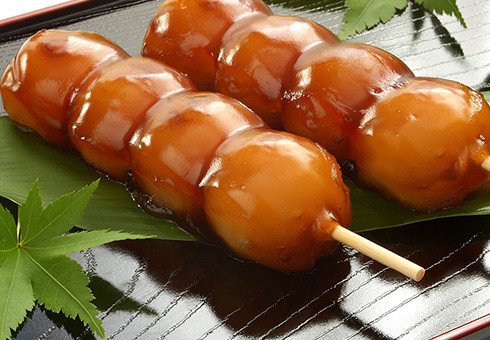
Jōshinko (上新粉) is made from non-glutinous rice that has been washed, dried and then milled. It produces a fairly firm dough with a noticeable chew, making it suitable for dango, kashiwa mochi and uirō. Ordinary rice flour produced outside Japan may give a similar result, although the rice variety and fineness of the flour can affect the texture.
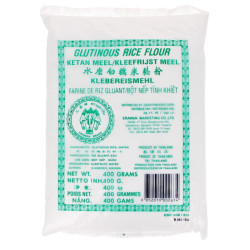
Mochiko (餅粉) is a fine glutinous rice flour, generally made by grinding the grains directly after washing and drying them. It produces a dense, sticky and elastic dough used for gyūhi, daifuku and certain mochi-style preparations.
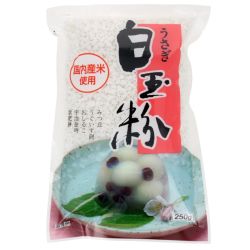
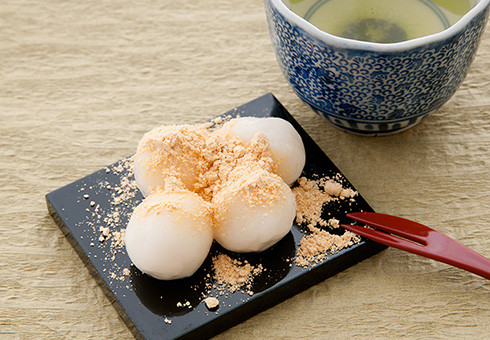
Shiratamako (白玉粉) is also made from glutinous rice, but using a different method: the grains are soaked and ground with water before the resulting mixture is drained and dried. It often comes in the form of small, crumbly granules that break down when mixed with water. Its particularly smooth and elastic texture makes it well suited to shiratama dango and sweets that need to remain soft.
Dōmyōjiko (道明寺粉) is made from glutinous rice that has first been steamed, then dried and coarsely crushed. More granular than a conventional flour, it retains a recognisable rice-grain texture after rehydration. It is particularly associated with Kansai-style sakuramochi. However, a simple coarse rice flour can only be called dōmyōjiko when its production method matches this definition.
For smooth, soft dumplings, shiratamako is generally the most suitable choice. Mochiko is better suited to elastic doughs and daifuku wrappers, while jōshinko produces firmer dango. Dōmyōjiko is chosen when the texture of the rice should remain noticeable.