Starches play a discreet but important role in Japanese cooking. They are used to thicken sauces and broths, create a smoother texture or form a thin, crispy coating around food.
Katakuriko and kuzu look similar as white powders, but their origin, texture and main uses are different.
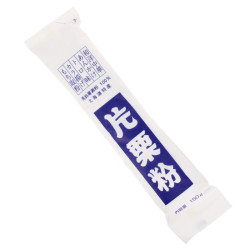
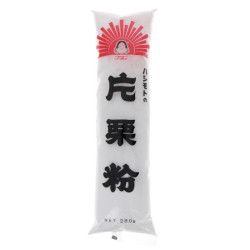
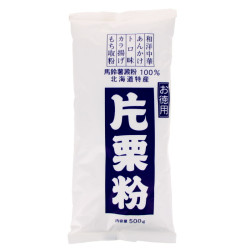
Katakuriko is a very fine potato starch commonly used in Japan. Its neutral flavour allows it to thicken a sauce, soup or broth without changing its taste.
Simply mix it with a little cold water before adding it to the hot preparation. It then produces a smooth, glossy and slightly translucent texture.
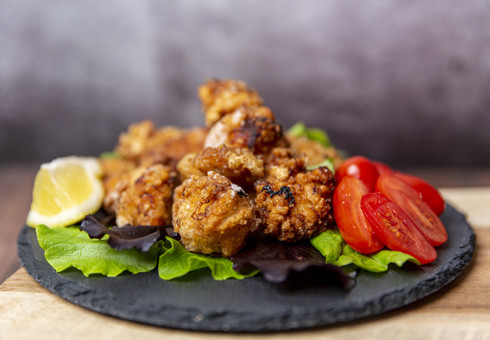
Katakuriko can also be used directly to coat chicken, fish, tofu or vegetables before cooking. In particular, it gives karaage and tatsuta-age their thin, crispy crust.
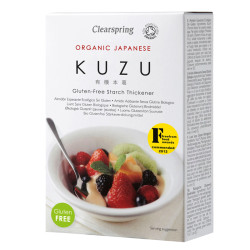
Kuzu is a starch traditionally extracted from the roots of kudzu, a climbing plant found in Japan. Producing pure kuzu requires a long process of washing, filtering and drying, which makes it a rarer product.
When heated after being mixed with cold water, it develops a smooth, supple and translucent texture.
It is used to thicken sauces, soups and desserts, as well as to prepare certain specialities such as goma-dofu and kuzuyu.
Products intended for the same uses may, however, contain other starches, particularly sweet potato starch. Their composition should therefore not be confused with that of pure kuzu.
Katakuriko is the simplest choice for everyday cooking: it thickens sauces quickly and is particularly well suited to Japanese fried dishes.
Pure kuzu is mainly valued for its delicate texture and for recipes in which the thickening agent plays a central role. It requires slightly gentler and more gradual cooking.
Neither product can replace rice flours, which are used to make doughs and certain Japanese sweets, or kinako, a roasted soybean flour used to flavour desserts.