Mirin (みりん) is a mild Japanese condiment that is essential to many traditional recipes. It adds roundness, a slight sweetness and an attractive glossy finish to sauces, marinades, simmered dishes and grilled fish.
Mirin is closely related to sake but is made from glutinous rice and, in the case of traditional hon mirin, alcohol. Fermentation gives it a natural sweetness and more complex aromas than ordinary sugar. Mirin has a slightly syrupy texture and can range from pale to amber in colour. It balances the saltiness of soy sauce, rounds out flavours and gives dishes an attractive glazed finish.
Mirin is one of the basic seasonings of Japanese cooking, together with soy sauce, cooking sake and rice vinegar. It is used especially in teriyaki sauces, Japanese simmered dishes, broths, noodle sauces and marinades for fish or meat.
Hon mirin (本みりん), literally “true mirin”, is traditional mirin. It contains alcohol and generally has a deeper, richer and less uniformly sweet flavour. It is the best choice for traditional Japanese recipes or when mirin plays an important role in the final balance of the dish.
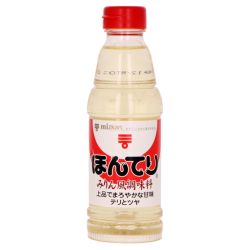
Mirin-style seasonings, often called mirin-fû chômiryô (みりん風調味料), are designed for straightforward everyday cooking and contain little or no alcohol, depending on the product. They are a convenient alternative for sauces, marinades and everyday recipes.
Always check the product page if the presence of alcohol is an important consideration for you.
Mirin is used in small amounts, often together with soy sauce. It is ideal for preparing homemade teriyaki sauce, adding flavour to a broth, softening a marinade or glazing salmon, chicken and vegetables.
It also brings balance to tofu, noodle and rice dishes. Following the recipe is generally the easiest approach, but mirin can be added to any type of dish where a touch of sweetness is required.