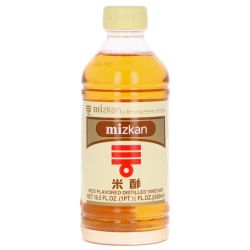
There are two main families. Rice vinegar, or komezu (米酢), is made primarily from rice, while cereal vinegar, or kokumotsusu (穀物酢), combines rice with other grains or with alcohol made from grains, depending on the recipe.
They are produced through successive fermentation stages: the starch in the grains is converted into sugars, then into alcohol, before acetic acid bacteria transform it into vinegar. The raw ingredients and production method then influence its roundness, aroma and the sharpness of its acidity.
Pure rice vinegar generally has a rounder flavour, with a mildness and rice aroma that remain noticeable. It is particularly well suited to delicate dressings, seaweed salads, vegetables and homemade sushi rice, to which you add the sugar and salt yourself. For a ready-balanced solution that can be mixed directly into hot rice, it is better to choose a sushi seasoning.
Cereal vinegar often has a lighter, sharper and more neutral profile. Widely used in Japanese home cooking, it works well in tsukemono, marinades, sauces and everyday seasonings. The grains used vary between products and may include rice, wheat, corn or sake lees.
The choice therefore depends less on a hierarchy of quality than on the desired result: komezu for a more noticeable rice flavour, and kokumotsusu for a clean, versatile acidity.