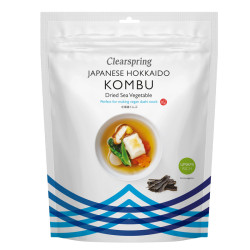
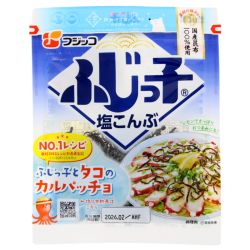
Kombu is one of those discreet ingredients that help structure Japanese cooking. This large brown seaweed, most often used dried, is one of the foundations of dashi and releases a deep umami flavour into the water.
It can also be added when cooking rice or used in simmered dishes, with a texture and intensity that vary depending on its origin, thickness and preparation method.
For a simple broth, use approximately 5 g of kombu for 500 ml of water. Gently wipe its surface with a slightly damp cloth or paper towel without washing it for too long: the fine white coating sometimes visible on the surface is natural and contributes to its flavour.
Leave the kombu to infuse in cold water for at least 30 minutes, then heat it gently and remove it before the water reaches a full boil. This method, explained in greater detail in our Japanese dashi guide, produces a delicate plant-based broth.
Kombu can also be combined with dried bonito katsuobushi to prepare awase dashi with a more complex flavour. The instant preparations in our Japanese dashi category meet a different need.
For a broth served simply, carefully selected Hokkaido kombu highlights the delicacy of umami particularly well.
A larger format is suitable for frequent preparation, soups, pulses and simmered dishes.
After infusion, the seaweed does not necessarily need to be discarded. Depending on its texture, it can be finely sliced and then simmered with soy sauce and mirin.
Kombu remains very different from thin, crispy nori and from wakame, which becomes tender after rehydration.