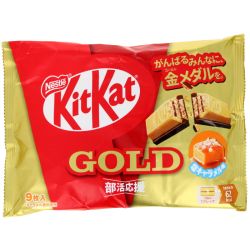
Japan did not invent Kit Kat, but it turned it into a genuine playground. Regional flavours, seasonal recipes, collaborations and limited editions have transformed this simple chocolate-covered wafer into a travel souvenir, a small gift and sometimes even a good-luck charm.
The only rule seems to be that your favourite flavour may disappear just when you have decided to buy it again. That is also part of the fun.
The ancestor of Kit Kat was created in the United Kingdom in 1935 under the name Chocolate Crisp. The Kit Kat name appeared in 1937, while the chocolate bar arrived in Japan in 1973.
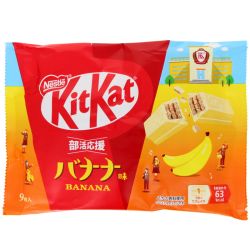
Its Japanese success is not based solely on the combination of chocolate and wafer. In the early 2000s, students in Kyushu connected its name with the expression きっと勝つ (kitto katsu), meaning “you will surely win”.
The similarity in sound became widely known, and Kit Kat developed into a gift of encouragement offered before an examination, competition or other important occasion. Few chocolate bars can claim a second career as a good-luck charm.
The answer is largely connected to the Japanese culture of omiyage, the edible souvenir brought home from a journey.
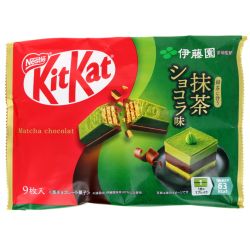
Kit Kat inspired by local specialities may therefore be sold in a particular region: Uji matcha, sweet potato, strawberry, citrus fruits and other flavours associated with a specific area.
These regional recipes are joined by seasonal flavours, collaborations with confectioners and new varieties available for a limited time. The small format also makes experimentation easier: trying an unexpected Kit Kat still requires rather less commitment than repainting your kitchen.
According to Nestlé Japan, more than 400 varieties have been marketed in the country.
The basic principle remains immediately recognisable: several layers of crispy wafer surrounded by a flavoured coating.
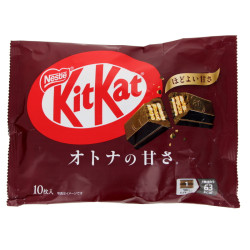
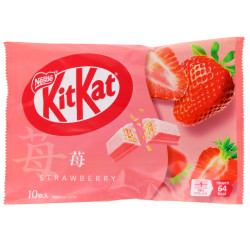
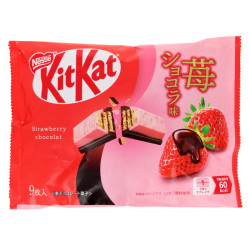
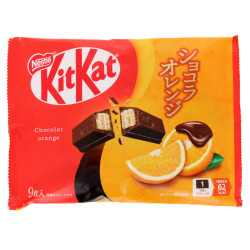
Dark cocoa suits those who prefer a more intense chocolate flavour, while orange adds a fruity and slightly tangy note. Strawberry versions are generally milder, while a strawberry shortcake-inspired recipe has more of a dessert character, with a creamier profile.
The available products change regularly according to production in Japan, which explains why the selection is never quite the same.
This creativity can also be found among Japanese sweets. For a more traditional treat, Japanese dorayaki combines a fluffy cake with an anko filling, while mochi and daifuku are distinguished by their glutinous rice outer layer.