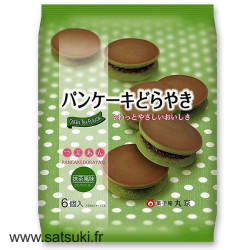
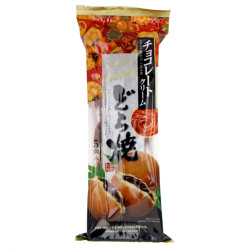
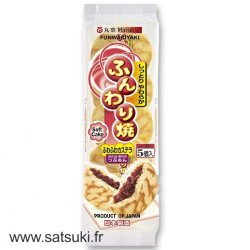
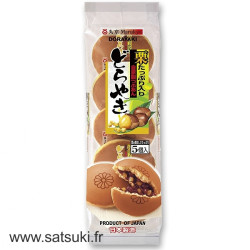
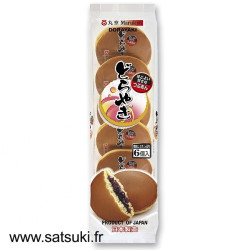
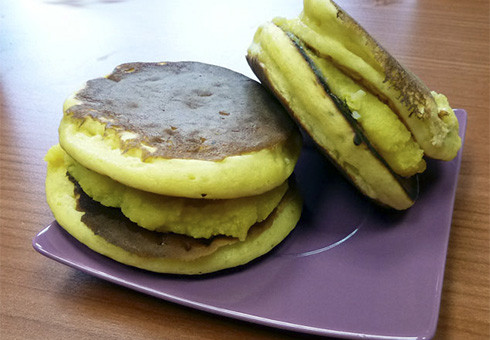
Japanese dorayaki consists of two small, round and fluffy cakes, similar to pancakes, sandwiched around a sweet filling. The batter is generally made with wheat flour, eggs and sugar.
Easy to carry and eat, dorayaki is a familiar snack in Japan. Its popularity has also had a little help from Doraemon, who famously loves them.
The classic recipe combines a lightly browned batter with anko, a sweet azuki red bean paste.
Tsubuan retains small pieces of bean and has a thicker texture, while fillings made with shiroan, prepared from white beans, are smoother and milder.
Dorayaki cakes should remain soft and fluffy: they enclose the filling without overpowering its flavour. To better understand or prepare this traditional filling, our azuki, anko and bean preparations category brings together the main products used in Japanese confectionery.
For a traditional flavour, choose an azuki dorayaki, preferably filled with tsubuan if you enjoy a bean paste with more texture.
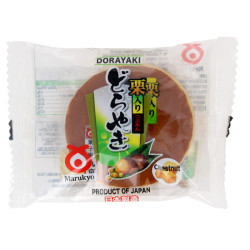
Chestnut naturally complements azuki with its round, slightly woody flavour.
Matcha adds vegetal notes and a slight bitterness, while yuzu is generally combined with shiroan to create a fresher, more fragrant filling.
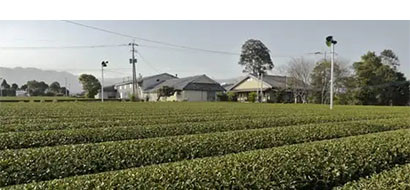
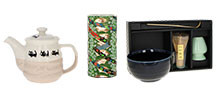
Dorayaki are eaten as they are, at room temperature, accompanied for example by green tea or hojicha. They remain very different from mochi and daifuku, whose outer layer is made from glutinous rice.
For a fruitier version, our yuzu dorayaki recipe shows how to combine this Japanese citrus fruit with a mild filling.