Filter By
Availability
Availability
Origin
Origin
Special
Special
In Japan, pickled ginger and tsukemono accompany meals in small amounts. They add acidity, crunch or a spicy note that contrasts with rice and cooked dishes.
However, this category includes very different products: gari shoga served with sushi, beni shoga used with popular dishes, as well as takuan, fukujinzuke and many other prepared vegetables.
Gari (ガリ) is ginger cut into thin slices and pickled in a mild, vinegary seasoning. Served with sushi, it is eaten between bites to refresh the palate. Whether white or pink, its use remains the same: the colour depends on the age of the ginger and the recipe used, and is not in itself an indication of quality.
More intense and generally cut into thin strips, beni shoga (紅生姜) is usually served with yakisoba, okonomiyaki and topped rice bowls such as gyûdon. It is traditionally associated with umesu, the salty, tangy liquid produced during the preparation of umeboshi. Its flavour is therefore less mild and distinctly saltier than that of gari.
Grated ginger, or ginger sold in tubes, is used as a cooking condiment. A small amount enhances sauces, marinades, noodle broths and dishes made with Japanese tofu. It does not replace pickled ginger: its purpose is to flavour the dish rather than to be served separately alongside it.
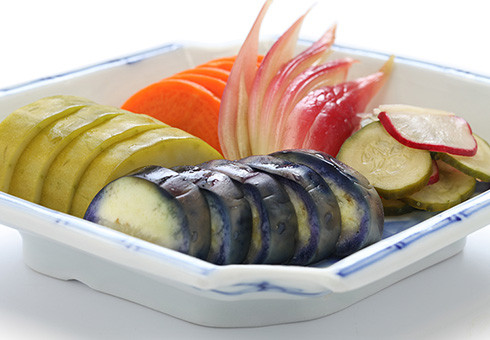
Tsukemono (漬物) are foods, most often vegetables, prepared with salt, vinegar, soy sauce, miso, rice bran or other seasonings. They are therefore not all pickled in vinegar or fermented. They are a familiar part of Japanese meals, generally served in small amounts with rice to add colour, a crunchy texture and a more pronounced flavour.
Takuan (沢庵) is prepared daikon radish, enjoyed with rice and cut into strips for certain maki.
Fukujinzuke (福神漬) combines several finely chopped vegetables in a mild seasoning and is traditionally served with Japanese curry. Pickled cucumbers and aubergines are served as small accompaniments to a meal.
You can also prepare your own vegetables using a base for homemade nukazuke and tsukemono. The preparation time and method have a strong influence on the result: quickly pickled vegetables retain plenty of freshness and crunch, while a longer preparation develops deeper flavours.
There are 2 products.
Active filters